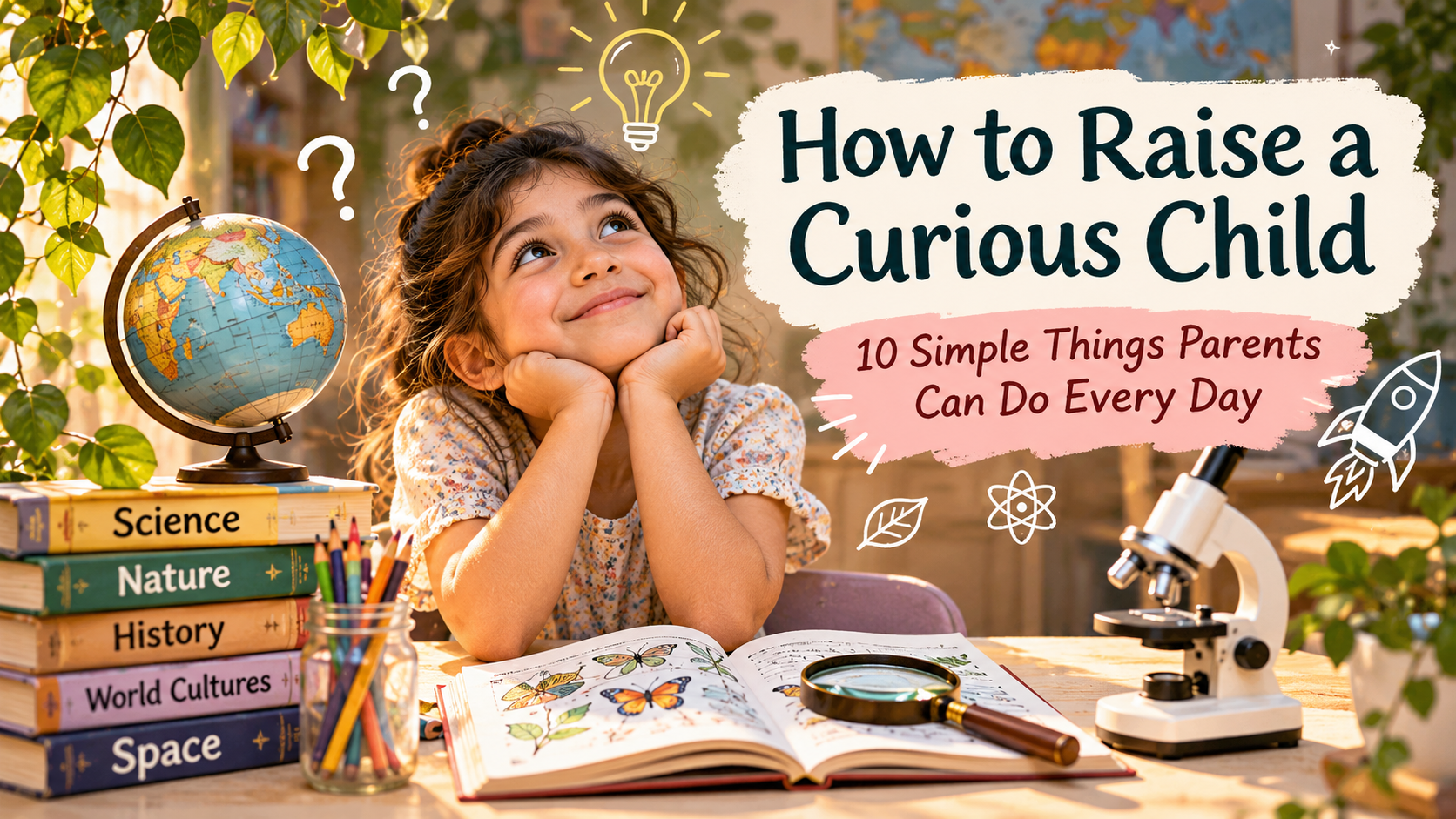
“Why is the moon following our car?”
“Where does the rain go after it falls?”
“Why do ants walk in a line?”
“Who decided that the sky should be blue?”
If you have a child at home, chances are you've heard questions like these. Sometimes they come one after another, just when you're trying to cook dinner, finish some work or get everyone out of the house on time!
And sometimes, after answering the tenth question of the morning, you find yourself saying, “I don't know! Why don't you look it up?”
But here's something worth remembering: when children ask questions, they're doing much more than simply looking for answers. They're learning how to understand the world.
That little “why?” is often the beginning of something wonderful.
Curiosity Is How Children Make Sense of the World
Think about how a young child experiences an ordinary day.
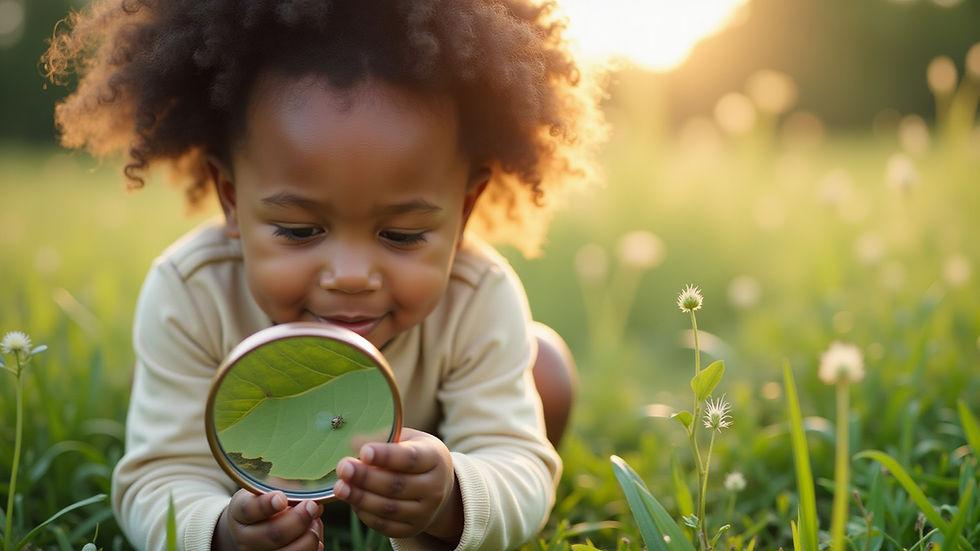
A puddle appears after rain. A bird flies across the garden. A shadow changes shape. An ice cube melts in a glass.
To an adult, these things may seem completely ordinary. We've seen them countless times, so we rarely stop to think about them.
But to a child, each one can be a little mystery.
They want to know why the ice melts, where the bird is going and why their shadow looks different in the afternoon.
Children are constantly observing, connecting ideas and trying to make sense of what they see. Questions help them explore those ideas and build new understanding.
This is why curiosity is such an important part of learning. It encourages children to look beyond what they already know and discover what they don't.
What Happens When a Child Asks "Why?"
A question might sound simple, but it can involve several important thinking skills.
When a child asks why the sky changes colour at sunset, for example, they are:
- Observing something happening around them.
- Recognising that they don't understand it.
- Trying to find a possible explanation.
- Making connections with things they already know.
- Developing an interest in finding out more.
As children grow, these habits help them develop critical thinking, problem-solving and reasoning skills.
Research into early childhood learning also highlights the importance of active exploration, conversation and responsive interactions with adults.
In other words, children don't learn only by listening to us explain things. They learn by wondering, experimenting, discussing and discovering.
The Little Moments When We Can Accidentally Discourage Curiosity
Let's be honest. Parenting is busy.
There are meals to prepare, schoolwork to finish, appointments to remember and a hundred other little things that need our attention.
So when a child asks why the same thing happens for the fifth time, it's understandable that we might not always have the patience to explore it.
Sometimes we respond with:
- "Because that's just how it works."
- "Don't ask so many questions."
- "You'll understand when you're older."
- "We've already talked about this."
- "Just listen to what I'm telling you."
None of us gets every response right, and that's perfectly okay.
But when these responses become a habit, children may gradually become less comfortable asking questions. They might begin to think that their questions are annoying, unimportant or not worth asking.
We don't need to turn every question into a full lesson. We simply need to make children feel that their curiosity is welcome.
Five Simple Ways to Encourage Your Child's Questions
You don't need expensive toys, complicated activities or hours of preparation. Often, a small change in how we respond can make a big difference.
1. Don't Rush to Give the Answer
When your child asks a question, try not to answer immediately.
Instead, ask:
"What do you think?"
For example, if your child asks why some objects float while others sink, invite them to make a guess.
Perhaps they think heavy objects sink and light objects float. You can then test that idea together using a bowl of water and a few household objects.
The interesting part isn't just finding the correct answer. It's allowing children to think, predict and discover.
2. Take Their Questions Seriously
Children don't always ask questions in a way that sounds logical to adults.
They might ask whether clouds are made of cotton or whether the moon gets lonely when the sun comes out.
Rather than dismissing the question, explore what might have made them think of it.
You could say:
"That's an interesting thought. What makes you think that?"
Sometimes the conversation that follows is more valuable than the original answer.
3. Let Them See You Being Curious Too
Children learn a great deal from watching the adults around them.
So let them see you wondering about things.
You might say:
"I've never thought about why some leaves turn yellow. Let's find out."
Or:
"I wonder how birds know where to fly when they migrate."
You don't need to know everything. In fact, showing your child that adults also ask questions and look for answers sends a powerful message: learning doesn't stop when we grow up.
4. Turn Everyday Questions Into Little Investigations
Some of the best learning opportunities happen during ordinary activities.
While cooking, you might wonder why water boils or why bread changes colour when toasted.
While walking outside, you could notice how ants carry food or how plants grow towards sunlight.
During a rainy afternoon, you might explore where puddles go when the sun comes out.
You don't have to prepare a formal science lesson. A little observation and a few questions can be enough to get a child's mind working.

5. Make It Okay Not to Know
One of the most useful things we can say to a child is:
"I don't know. Let's find out."
This teaches children that not knowing something isn't a failure. It's an opportunity to learn.
Look through a book, watch an educational video, visit a library or conduct a simple experiment together.
More importantly, show them how to find reliable information rather than simply accepting the first answer they come across.
What If Your Child Asks Too Many Questions?
Some children seem to have an endless supply of questions. They ask about everything, revisit the same topics and sometimes move from one question to another before you've finished answering the first.
It can be exhausting!
You don't have to answer every question immediately. It's perfectly fine to say:
"That's a great question. Let's talk about it after dinner."
You could also keep a small notebook where you write down interesting questions to explore later.
The important thing is to avoid making your child feel that asking questions is a problem.
And remember, children don't always need a detailed explanation. Sometimes a short, age-appropriate answer is enough. If they want to know more, they'll usually ask another question.
Start a Family Question of the Day
Here's a simple activity you can try at home.
Choose one interesting question each day and explore it together.
You could take turns choosing the question, or write them on small pieces of paper and pick one at random.

- Why do we see lightning before we hear thunder?
- How do birds know where to migrate?
- Why does the sea look blue?
- How do plants drink water?
- Why do we have fingerprints?
- How do bees know which flowers to visit?
- Why does the moon appear to change shape?
- Where does electricity come from?
You can discuss the question, draw what you think might happen, read about it or try a simple experiment.
There are no complicated rules. Just explore together.
Remember: You Don't Have to Know Everything
Perhaps one of the biggest misconceptions about parenting is that we need to have all the answers.
We don't.
We can be curious alongside our children. We can admit when we don't know something, look for answers together and sometimes discover something completely unexpected.
The next time your child asks, "But why?", try to pause before answering.
That question might lead to a conversation, an experiment, a new interest or even a lifelong love of learning.
And perhaps that's what nurturing curiosity is really about: not filling a child's mind with all the answers, but helping them develop the confidence to keep asking questions.
Because a curious child doesn't just want to know what the world is like. They want to understand how it works.
A Little Challenge for Parents
For the next seven days, make a small effort to notice your child's questions.
Don't worry about answering every one perfectly. Instead, choose one question each day and explore it together.
You might be surprised by where a simple question takes you.
What is the most unexpected question your child has ever asked you? We'd love to hear about it.